Blog › Reddit unrestricted AI text-to-video: A private guide to AnimatorHub.ai
Reddit unrestricted AI text-to-video: A private guide to AnimatorHub.ai
Reddit unrestricted AI text-to-video - AnimatorHub.ai: private prompts, credits, 1080p clips, and 18+ rules.
Key Takeaways
A Reddit unrestricted AI text-to-video search usually reflects a desire for fewer arbitrary refusals, private creation, and clear control over adult work. The useful approach is to check the actual workflow, payment model, privacy settings, and safety rules before generating anything.
- “Unrestricted” usually means fewer content filters, not unlimited permission.
- Text-to-video results improve when prompts describe subject, setting, movement, and camera behavior.
- Short test clips help you judge motion, consistency, and visual quality before spending more credits.
- Privacy, age verification, consent, and source rights still matter for adult projects.
- A private library, transparent credits, and practical prompt tools make repeated work easier.
What “Reddit unrestricted AI text-to-video” usually means
The phrase is less a technical category than a search shortcut used by adult artists, filmmakers, and curious hobbyists. They are often looking for a text-to-video workflow that accepts mature themes without treating every adult request as a violation. Reddit can offer useful first-hand opinions, but recommendations should be checked against published controls and policies.
Why creators search Reddit for less restricted video tools
Mainstream services often set broad rules for mixed audiences, so adult creators may encounter refusals even when a scene involves consenting adults and no illegal material. Reddit discussions can point people toward tools with wider creative boundaries, but a thread rarely tells the whole story. Check whether a service explains its age gate, private storage, payments, and prohibited content before uploading personal material.
The phrase Reddit unrestricted AI text-to-video - AnimatorHub.ai therefore describes a practical search intent rather than a promise that every prompt will pass. The distinction matters because fewer filters still leave room for legal, ethical, and platform limits.
How AnimatorHub.ai differs from mainstream AI video platforms
AnimatorHub.ai is an AI-powered video generation platform for adults that generates cinematic 1080p clips from text descriptions, still images, or existing video sources. Its stated model is pay-as-you-go, anonymous by design, and based on credits, with one credit equal to one second of generated video. That combination gives creators a direct way to test a workflow without committing to a subscription.
For background on checking controls, privacy, pricing, and boundaries before committing, see this Reddit AI video guide. It is a useful reminder to judge a tool by its published behavior rather than by the word “uncensored” alone.
The role of artistic freedom in adult and experimental projects
Adult filmmaking, surreal animation, fetish illustration, and intimate character studies can all require visual choices that general-purpose tools reject. Artistic freedom does not remove the need for consent or rights to reference material. It simply gives an adult creator more room to decide what a lawful project should look like.
That room is especially useful during early visual planning. A filmmaker can test a mood, a camera move, or a fantasy setting before deciding whether the idea belongs in a longer production.
Important expectations about output quality and content limits
A broad prompt does not guarantee a coherent clip. AI video may alter faces, hands, clothing, scale, or background details as motion develops, and short generations often work better than ambitious single-pass scenes. Treat each result as a visual draft that needs review.
The platform’s published limits still apply: users must be 18 or older, and content involving minors or child sexual abuse material is prohibited. Those boundaries are not optional, even when a tool describes itself as unrestricted.
How AnimatorHub.ai’s text-to-video generator works
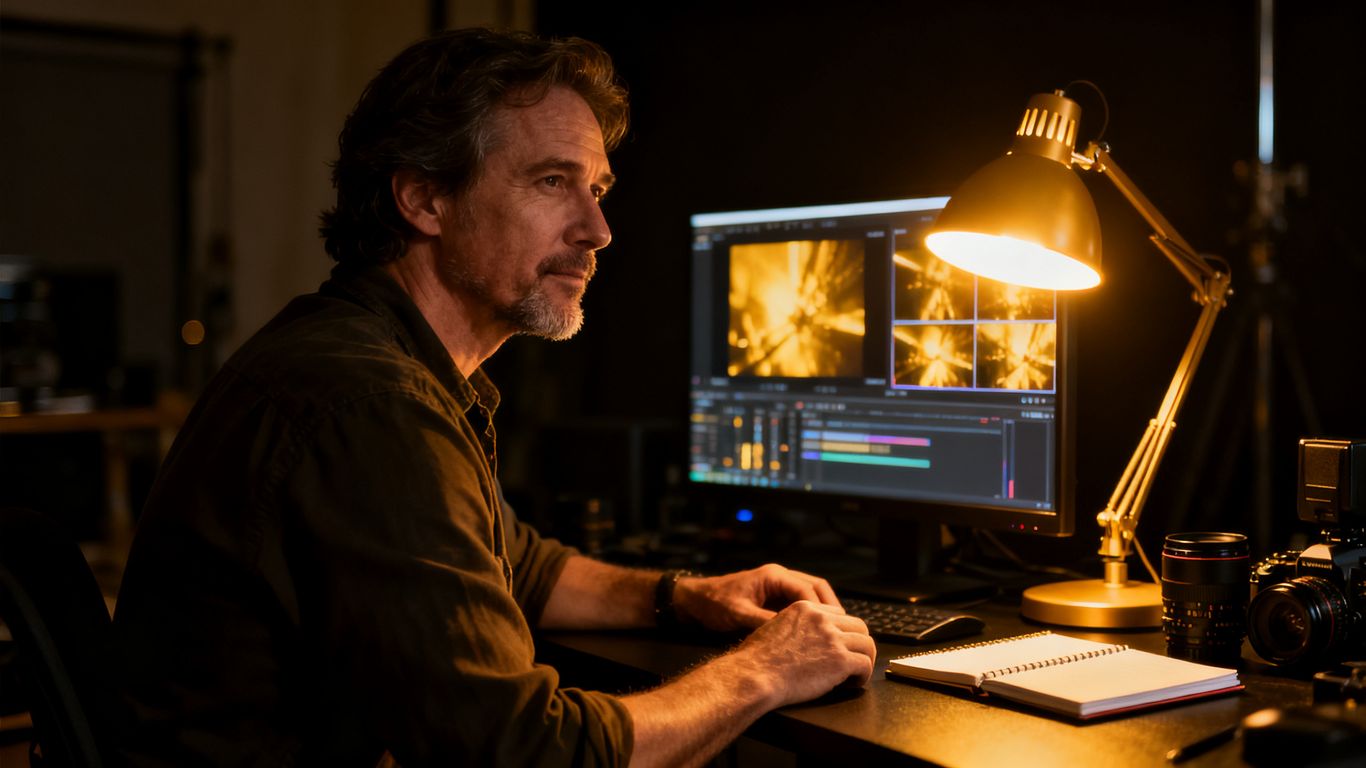
The text-to-video mode starts with a plain-language description and provides controls for duration, aspect ratio, and shot type. The documented text-to-video durations are 5, 10, or 15 seconds, which makes the workflow suited to short scenes and iterative testing. A simple first pass is often more useful than spending credits on a long, overloaded description.
Writing a scene description from scratch
Begin with the subject, location, action, and visible mood. “An adult dancer crosses a rain-wet rooftop at night” gives the model a starting point, while details about posture, pace, clothing, and the surrounding architecture add direction. Keep the main action singular when you want motion to remain readable.
A prompt can then add the shot type and visual treatment. The prompt writing guide offers formulas and examples for text-to-video, image-to-video, and video-to-video work without requiring technical language.
Choosing duration, aspect ratio, and shot type
Duration should match the idea, not the other way around. A five-second close-up can test a facial expression or a turn, while a longer setting shot may need ten or fifteen seconds. Aspect ratio should follow the destination: a wide frame suits a cinematic scene, while a vertical frame fits many mobile feeds.
Shot type also changes what the model must preserve. A close-up prioritizes the face and upper body, a medium shot gives movement more room, and a wide shot asks the system to maintain more environmental detail.
Generating 1080p video with the credit system
The platform documents 1080p output and a transparent credit rule: one credit equals one second of generated video. That means a five-second result uses five credits, while a fifteen-second result uses fifteen. Credits are purchased in packages and do not expire, according to the supplied product information.
| Generation length | Credits used | Good first test |
|---|---|---|
| 5 seconds | 5 credits | Motion or expression |
| 10 seconds | 10 credits | A short action beat |
| 15 seconds | 15 credits | A fuller scene pass |
| Multi-shot sequence | Based on total seconds | Several connected shots |
This structure makes the cost of an experiment easy to estimate before generation. It also encourages a sensible habit: test the visual idea first, then spend more on the version worth keeping.
Tracking processing status and viewing completed clips
The My Videos area shows whether a generation is pending, processing, completed, failed, or expired. In-progress items refresh automatically, and a completion notification includes a thumbnail and a watch action. Completed clips can be watched in a modal player and downloaded.
A failed or expired item can be regenerated with its original prompt, duration, ratio, and negative prompt pre-filled. That saves time when the problem is processing rather than the concept itself.
How to write stronger prompts for unrestricted AI video
Prompting works best when it gives the model a clear order of priorities. Start with what must appear, then describe what must happen, and finish with the look of the shot. Specific motion beats vague detail when the goal is a stable, readable clip.
Structuring prompts around subject, setting, and action
A reliable structure is subject, environment, action, and result. State who or what is visible, where the scene takes place, what changes during the shot, and how the moment ends. For adult work, describe consenting adults plainly and avoid relying on coded wording that may produce an unintended interpretation.
For example, a scene might describe an adult performer in a private studio, turning slowly toward a window while colored light moves across the room. The action is simple enough to preserve, while the location and lighting give the clip a visual identity.
Adding camera movement, lighting, and cinematic style
Camera language gives the generator a sense of movement beyond the subject itself. Try a slow push-in, a locked-off medium shot, a gentle tracking move, or a high-angle view. Lighting can specify soft window light, warm practical lamps, cool moonlight, or a high-contrast studio setup.
Do not stack every style word into one sentence. Pick one camera move, one lighting idea, and one broad visual style, then review what the first result actually follows.
Using prompt expansion and the built-in enhancer
The built-in enhancer can expand a short description, and the platform also documents automatic negative-prompt generation. These tools are useful when you know the scene but do not yet have the vocabulary for lens choice, composition, or motion. Read the expanded result before submitting so it still matches your intention.
A good expansion should add concrete visual information, not replace the central action with a different story. If the output becomes too busy, shorten the prompt and keep only the details that affect the shot.
Creating negative prompts to reduce unwanted artifacts
Negative prompts can identify things you do not want to see, such as extra fingers, warped faces, unstable anatomy, unreadable background details, sudden camera jumps, or flickering objects. They work best as a short list tied to the scene rather than a huge catalogue of every possible defect.
Use the first result to decide what belongs in the next negative prompt. If the face is stable but the hands fail, focus the correction there instead of changing the entire visual direction.
Ways to use text-to-video for adult and creative projects
Text-to-video is useful beyond finished adult content. It can help with visual development, storyboarding, social clips, experimental animation, and private studies of movement or lighting. The strongest workflow treats short clips as building blocks rather than expecting one generation to carry an entire film.
Prototyping cinematic scenes and story concepts
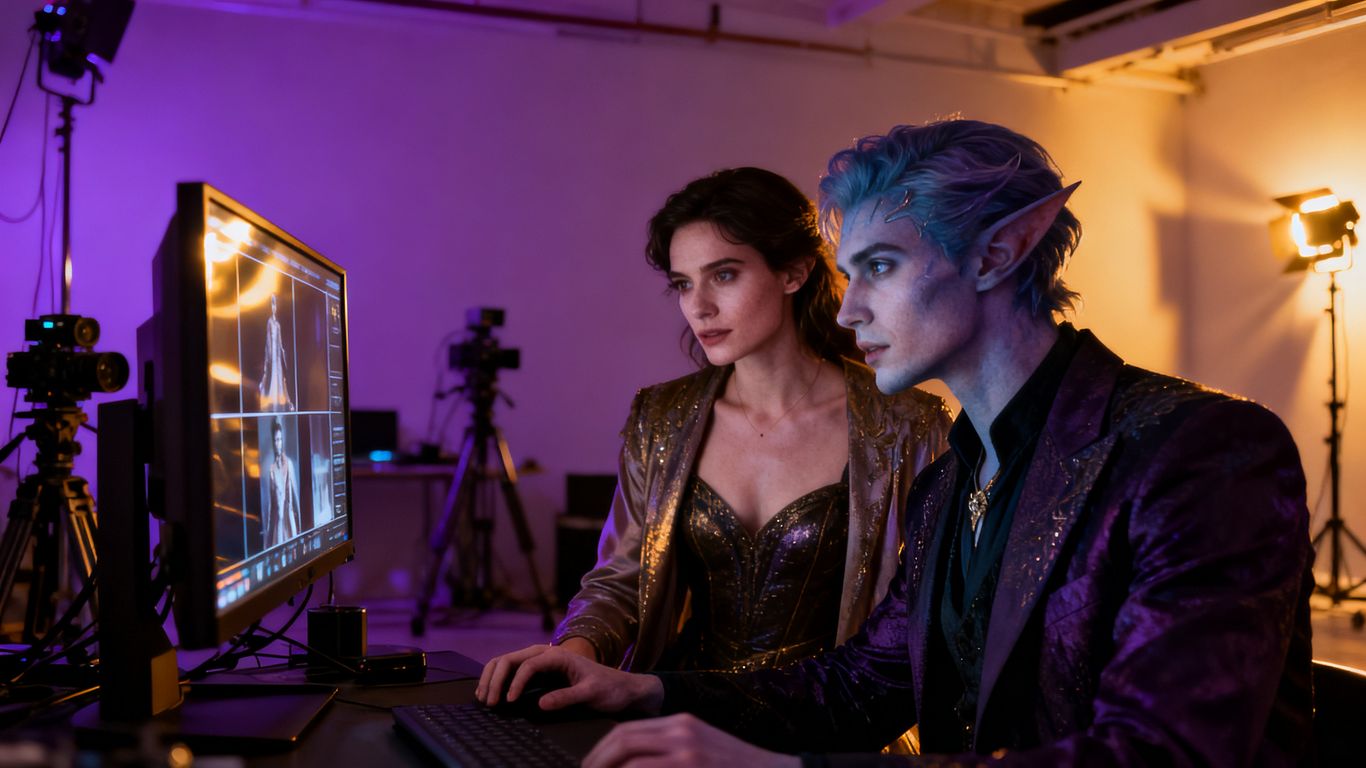
A short generation can answer a practical question quickly: does the location feel right, does the action read clearly, and does the camera movement support the mood? You can test a bedroom, nightclub, forest, spaceship, or studio without first arranging a full production. This makes text-to-video useful during visual planning, even when the final scene will be edited later.
Keep each test focused on one story beat. A character entering a room is easier to assess than an entire sequence involving an entrance, confrontation, transformation, and escape.
Creating character-driven fantasy sequences
Fantasy scenes benefit from a clear character action and a strong setting. Describe the adult character’s appearance consistently, then repeat the key identifiers across related prompts. Clothing, hair, posture, and color palette can help, though generated continuity will still require review.
Consent and source rights remain part of the process. Do not use a real person’s likeness or private image for an intimate scenario without permission, and do not treat fictional framing as a way around that responsibility.
Developing social media clips and visual experiments
Short vertical videos can work well for teasers, mood pieces, visual jokes, and experimental edits. Start with a strong opening image or movement because a viewer may only see a few seconds. Then check whether the framing survives on a phone-sized screen.
A small test set can include these practical variations:
- A close-up focused on expression and eye movement.
- A medium shot built around one clear gesture.
- A wide shot testing the environment and camera path.
- A vertical version with the subject kept near the center.
Comparing these versions makes it easier to choose a direction before generating a larger batch. It also exposes framing problems early, when they cost fewer credits to fix.
Combining text prompts with multi-shot narratives
The multi-shot narrative mode is intended for longer cinematic sequences planned with timestamps. Break the idea into separate shots, give each one a clear purpose, and repeat the details that must remain consistent. A simple sequence might move from an establishing view to a medium action shot and then to a close-up.
The connection between shots matters more than decorative wording. Keep the character, setting, time of day, and emotional beat stable unless the change is deliberate.
Privacy, payments, and content rules to understand
Adult video work often involves sensitive prompts, references, and finished files, so privacy should be considered before the first upload. The platform documentation describes anonymous creator profiles, private uploaded files, and no public identity shown in the public interface. You should still read the linked privacy and terms pages for the full handling details.
How anonymous accounts and private libraries work
The documented account model uses Google sign-in while keeping the public creator profile anonymous. No display name, avatar, or public identity is shown, and email is visible only to the account owner inside the user menu. Uploaded files are stored privately and tied to the account.
That setup reduces public exposure, but account security remains your responsibility. Use a secure account, avoid sharing access, and review every visibility setting before sending a clip to the public gallery.
Paying for generations with credits and cryptocurrency
Credits provide a pay-as-you-go way to measure video generation by seconds rather than by a recurring subscription. The listed packages include 100, 500, and 1,000 credits, while cryptocurrency payments support BTC, ETH, USDT, and more. Credit card payments are described as coming soon in the supplied documentation.
| Package | Listed price | Effective rate |
|---|---|---|
| 100 credits | $30 | $0.30 per second |
| 500 credits | $125 | $0.25 per second |
| 1,000 credits | $200 | $0.20 per second |
Before paying, estimate the length of your test clips and leave room for failed attempts. The credit balance, transaction history, and low-credit warnings help keep that calculation visible.
Keeping generated videos private or sharing them publicly
Completed videos can be watched, downloaded, hidden, deleted, or made public in Explore. The public gallery contains community videos that their creators have chosen to share, so private work should remain private unless you deliberately change its visibility.
Albums also help separate experiments from approved material. Organizing clips as you go is less stressful than sorting a large collection after several sessions.
Following the 18+ requirement and prohibited-content rules
The service is for adults and requires age confirmation on first visit. Its published hard limits prohibit content involving minors and child sexual abuse material of any kind. Consent, privacy, and rights to source images or footage remain necessary even when a prompt is otherwise allowed.
When a concept involves a real person, keep clear permission records and avoid using private material without authorization. “Unrestricted” should never be read as permission to violate someone else’s rights.
How to get better results from AnimatorHub.ai
Better results usually come from a repeatable review cycle rather than from one perfect prompt. Make a short generation, inspect the motion, identify one problem, and revise only that part. The platform’s library, albums, Explore gallery, and Guide support that process without requiring you to keep every version in your head.
Testing short generations before building longer sequences
Start with five seconds when you are testing a new subject, style, or camera move. Look for face stability, body motion, object continuity, and whether the scene reaches a clear visual moment. If those basics work, move to ten or fifteen seconds.
Longer output cannot repair a weak first action. It usually gives the same problem more time to appear, so early tests are a practical way to limit wasted credits.
Refining prompts after reviewing the first output
Read the result as evidence, not as a final judgment on the whole idea. If the subject is right but the camera drifts, change the camera instruction. If the environment works but the movement is chaotic, simplify the action and add a negative prompt for unwanted motion.
Make one or two changes per pass. Large rewrites make it difficult to know which instruction improved or damaged the result.
Organizing successful videos with albums
Albums are useful for separating prompt tests, approved clips, character studies, and projects for export. Videos can be added or removed through album controls, reordered by drag and drop, and managed in bulk. This matters once a project produces more than a handful of variations.
A simple naming habit helps too. Record the subject, shot type, and version number in the prompt or your own notes so a strong result can be repeated later.
Regenerating failed or expired creations efficiently
Failed and expired generations can be regenerated with the original prompt, duration, ratio, and negative prompt pre-filled. That keeps a processing problem separate from a creative rewrite. Review the pre-filled settings before submitting, especially if the scene was part of a larger sequence.
If the same prompt fails repeatedly, change the concept or reduce its complexity. Repeating an overloaded instruction rarely fixes the underlying issue.
Using the Explore gallery and Guide for inspiration
Explore provides a public gallery with filters for text-to-video, image-to-video, and video-to-video work. The Guide adds prompt formulas, cinematic vocabulary, motion terms, lighting references, and before-and-after examples. Both are most useful when you study structure rather than copy a finished prompt word for word.
AnimatorHub.ai is built around short generation cycles, private library management, and adult creative control. Used with clear prompts and realistic expectations, those tools can turn a loose idea into a set of workable visual drafts.
Conclusion
A Reddit unrestricted AI text-to-video search is best treated as the start of a careful comparison, not a guarantee of unlimited output. Check the tool’s generation controls, credit model, privacy settings, and adult-content rules, then begin with a short prompt and a small test. That approach gives you more control over both the creative result and the material you choose to keep private.
Frequently Asked Questions
What does “unrestricted AI video” usually mean?
It generally means a service applies fewer automated content filters than broad-audience tools. It does not mean that illegal, non-consensual, or prohibited material is allowed.
Is text-to-video suitable for adult creative work?
It can be useful for adult scenes, fantasy concepts, mood tests, and visual studies when all depicted people are adults and the creator has the necessary rights and consent.
Why do short AI video clips often work better?
Short clips give the system fewer actions and transitions to maintain. They also let you test motion, framing, and character stability before spending more time or credits.
What should an AI video prompt include?
A useful prompt normally identifies the subject, setting, action, camera behavior, lighting, and broad visual style. Keeping the action focused often produces a clearer result.
How can creators protect private AI videos?
Use private libraries, review visibility controls before sharing, secure the account connected to the service, and avoid uploading personal material without permission.
Are AI-generated videos always consistent from shot to shot?
No. Faces, clothing, anatomy, and backgrounds can change between generations. Repeating key details and planning one shot at a time can improve continuity, but review is still necessary.
What should someone check before paying for an AI video tool?
Review the credit or subscription model, generation limits, privacy policy, age rules, prohibited-content policy, payment options, download controls, and how failed generations are handled.