Blog › Abliterated vs uncensored AI models: A complete guide
Abliterated vs uncensored AI models: A complete guide
Abliterated vs uncensored AI models: A complete guide for creators seeking unrestricted performance and privacy.
Key Takeaways
Understanding the landscape of AI censorship is essential for creators who demand complete control over their artistic and professional outputs.
- Abliteration removes refusal directions without requiring the extensive retraining of standard fine-tuning.
- High-quality unrestricted models retain logical reasoning while avoiding pre-programmed moral refusals.
- Hosting models locally allows for total privacy and keeps content outside of Big Tech content filters.
- Choosing between abliterated and uncensored models depends on your specific compute budget and accuracy needs.
- Professional tools like Animator Hub provide integrated environments for creators to utilize these models without building custom infrastructure.
Understanding uncensored AI models
Modern large language models are typically built on foundation layers that possess latent knowledge, but are heavily conditioned via Reinforcement Learning from Human Feedback. This safety training creates models that pivot to generic refusal strings when prompted with adult, controversial, or non-mainstream topics. While intended to prevent harm, these mechanisms often force the model to reject benign queries, fundamentally limiting user autonomy in creative and research workflows.
The role of fine-tuning and safety RLHF
Safety-aligned models go through a secondary alignment phase that conditions the neural weights to prioritize compliance with strict usage policies rather than pure instruction following. This process is effective for mainstream deployment but often narrows the creative capability of the model in specific domains. Creators looking to avoid these limitations often turn to alternative models where this extra layer of restrictive training is absent.
How base models behave without guardrails
Base models without these extra constraints treat every prompt objectively, focusing on pattern prediction rather than policy adherence. You will find that these models generate text or code exactly as requested, even for sensitive subject matter. It is a powerful way to regain creative agency over your AI tools without sacrificing logic or coherence.
Common limitations of raw uncensored checkpoints
Raw models that have simply had their safety layers stripped may experience degraded performance in complex tasks or increased tendencies toward repetitive output. These models require thoughtful prompting to manage tone and intent effectively compared to highly tuned alternatives. Animator Hub offers tools that simplify this management, providing refined experiences for users who require uncensored artistic expression.
The mechanics of model abliteration

Model abliteration offers a technical alternative to standard retraining by specifically removing the refusal mechanism from the model's internal vector space. Instead of masking the model weights or training it to ignore safety protocols, the technique identifies and neutralizes the specific directional vector where the refusal response lives. This leaves the broader intelligence of the model largely undisturbed.
Direction-based intervention in vector space
Researchers identify the refusal vector by comparing activations from both harmful and harmless prompts across large datasets, documenting the consistent patterns associated with typical safety refusals. By rotating these internal representations away from that specific direction, users can keep the original model intelligence while effectively disabling the hard-coded triggers for rejection.
Preserving model intelligence while removing refusal patterns
This technique is often more effective than traditional fine-tuning because it avoids overwriting the foundational knowledge that the model acquired during pre-training. You gain the advantage of a highly capable model that follows your instructions precisely. A comparison of uncensored techniques reveals how these methods outperform older models in maintaining complex output structures.
Why abliteration differs from standard fine-tuning
Standard fine-tuning often inadvertently narrows a model or introduces new biases if the tuning dataset is too limited. Abliteration is a surgical intervention that modifies the activation processing, allowing the existing model weights to function as they would without the safety constraints. This makes it an ideal method for users needing a robust toolset, such as those found on abliteration.ai for enterprise security research.
Comparative output analysis
Evaluating model performance remains a central challenge for users who need consistent quality alongside complete freedom. Below is a comparative look at how these models perform in common scenarios including logic, creative writing, and accuracy.
| Performance Metric | Uncensored Base | Abliterated Model | Standard Instruct |
|---|---|---|---|
| Refusal Frequency | Very Low | Near Zero | Very High |
| Logical Coherence | High | Very High | Excellent |
| Creative Range | Broad | Broad | Highly Restricted |
Adherence to creative freedom and complex prompt requirements
Models that are free from refusal layers provide significant advantages for cinematic storytelling and persona-driven character generation. Users can expect that Animator Hub provides an environment where these models excel at maintaining the necessary tone for creative projects without hitting restrictive filters.
Maintaining logical coherence and internal consistency
Logic remains strong in models modified via abliteration, which ensures that long-form writing or complex coding tasks remain functional throughout the output. Unlike models that degrade through excessive tampering, these versions maintain their internal reasoning structures well. Consider these factors:
- Test your models with multi-step logic prompts to assess coherence.
- Verify that the model respects instruction-based style parameters consistently.
- Check if shorter, punchy prompts deliver identical quality to longer, detailed ones.
- Monitor for drift in character voice over extended conversational threads.
Impact on hallucination rates and factual accuracy
While some fear that removing safety training increases hallucinations, data indicates that the base accuracy depends largely on the underlying raw model rather than the absence of refusal patterns. High-quality abliterated models remain reliable tools for factual queries that fall outside restricted territory.
Hardware and deployment requirements
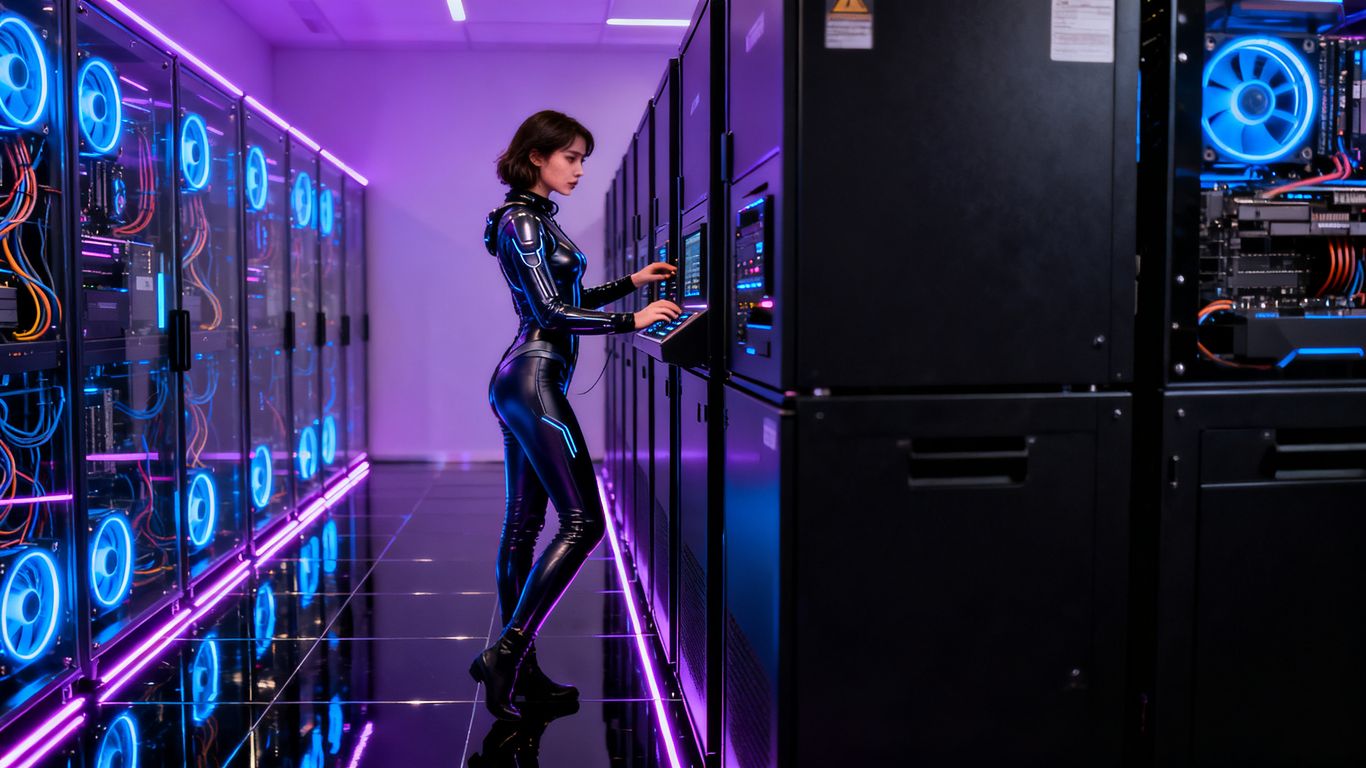
Deploying uncensored models usually requires significant local hardware, specifically VRAM that can handle the full weights of the model without offloading to slower CPU memory. For users who cannot manage their own infrastructure, cloud-based APIs provide a flexible way to access the same unrestricted capabilities. It is a matter of preference regarding whether local control or cloud speed suits your project needs.
VRAM usage and optimal model parameter sizes
Most modern open-weight models require at least 12GB to 24GB of VRAM for comfortable inference at decent speeds. Using quantization models allows you to fit larger 70B parameter models onto consumer-grade hardware like an RTX 3090, though this comes with a slight trade-off in raw precision. The size you choose should depend on the complexity of your prompts and the duration of your output.
Comparing local hosting to specialized cloud-based APIs
Local hosting gives you absolute privacy and total control over your data but requires a commitment to hardware maintenance and compute power. Cloud alternatives, such as those that list top uncensored models, offer turnkey solutions where the infrastructure management is offloaded to the provider, ensuring consistent performance for high-volume tasks.
Balancing inference speed and output quality
Speed is frequently a result of the model size and the quantization method being applied. For tasks such as digital marketing content drafts or research synthesis, a 7B or 8B model often provides the best balance of fast token generation and coherence for the average user.
Ethical and legal implications
Creators deploying these models must be aware that their output is not protected by the safety filters built into commercial chatbots, placing the responsibility for the generated content squarely on the user. This dynamic places models in a position similar to professional-grade creative software, where intent and usage remain the user's domain.
Liability concerns for creators using unrestricted models
Because unrestricted models produce exactly what is requested, users need to ensure their output complies with applicable copyright and safety laws. Animator Hub provides a platform where these concerns are mitigated by clearly stating that creators hold full control over their workflows, assuming all responsibility for the nature of their generated assets.
Privacy vs public cloud processing of sensitive content
If you are handling sensitive information like records or intellectual property, local hosting is the most secure path to prevent data leakage. Public cloud APIs offer convenience but involve transmitting your data to third-party endpoints. Always evaluate the specific data privacy policies of your chosen model provider when sensitivity is a factor.
Navigating community content policies versus model-level restrictions
Platforms have varying rules on how AI-generated content can be shared or uploaded. It is common for users to find the model itself uncensored while the community platform remains strictly regulated. A balance is necessary to leverage these tools for maximum productivity while staying within your preferred platform's guidelines.
Practical use cases for unrestricted AI
For those who need quiet pickleball to stay peaceful with neighbors or just want to boost health with creatine, the world is full of niche requirements that demand tailored solutions. Similarly, AI models tailored for specific, unrestricted outcomes unlock significant potential for creative professionals.
Creative writing and unrestricted cinematic storytelling
Authors can use these models to flesh out complex, adult, or high-stakes narratives that would be blocked by standard commercial tools. Because the AI doesn't feel the need to preach or refuse, your character arcs stay true to your vision, and the intensity of your scenes is never dampened by automated moral guardrails.
Building persona-driven AI companions
Creating unique AI personalities has become a standard use case for unrestricted models, allowing users to build partners that feel consistent and authentic over long-term interactions. Animator Hub offers exactly this, providing a detailed guide to abliteration for those who want to see how this works under the hood for character creation.
Prototyping edge cases for research and development
Developers utilize unrestricted models to stress-test their systems, verifying how the AI handles unexpected inputs or fringe scenarios. This is vital for cybersecurity red teaming where an AI is asked to generate hypothetical attack vectors or audit code without moralizing the request. Doing this effectively also requires expert appliance repair levels of technical confidence in your system stability during high-load tests.
Conclusion
Choosing between abliterated and uncensored models involves weighing your need for raw performance against your ability to manage local or cloud-based infrastructure, but the outcome is essentially the same: complete creative authority over the technology you use. By removing structural refusals, you return to a model that acts as a tool rather than a moral monitor, allowing your professional or artistic intent to guide the output without bias or limitation.
Frequently Asked Questions
Are abliterated models dangerous to use?
The risk is primarily related to how the content is used rather than the model itself; abliterated models lack the soft filters of commercial products, meaning they will generate whatever the prompt requests, making the user solely responsible for the content, its safety, and its compliance with legal or community standards.
How does abliteration differ from standard prompt engineering?
Prompt engineering typically involves crafting specific input styles to encourage a model to bypass its filters, whereas abliteration is a technical, hardware-level modification of the model's neural weights to permanently remove its refusal mechanism, rendering those traditional jailbreak prompts unnecessary.
Do abliterated models hallucinate more often than standard models?
Hallucination rates are generally intrinsic to the base model's training data, not the presence of a refusal mechanism, so an abliterated model should function as accurately as its non-abliterated base version provided the base quality is high.
Can I run an abliterated model on a standard gaming computer?
Yes, provided your system has sufficient VRAM to load the model's weights; modern consumer GPUs with 12GB to 24GB of VRAM are well-suited for running high-quality, quantized versions of most common uncensored models comfortably.
Is abliteration a permanent change to the model?
Yes, the process modifies the model's activation space or its specific weights, meaning the change persists across sessions, allowing the updated model to function as a fully unrestricted tool every time you call it for a task.
Which perform better: abliterated models or fine-tuned uncensored models?
It depends on the quality of the base model used; there is currently no consensus, because both methods aim to remove the same constraints, though abliterated models often retain more of the original's logical depth since they require less extensive fine-tuning.
Can I use uncensored models for sensitive research?
They are frequently used for security auditing and sensitive research because they do not refuse to engage with topics that commercial entities flag as controversial, making them essential tools for red team engagements and authorized security testing.